Request a FREE SEO audit & quote
Unlock the full potential of your online presence with our expert SEO services.
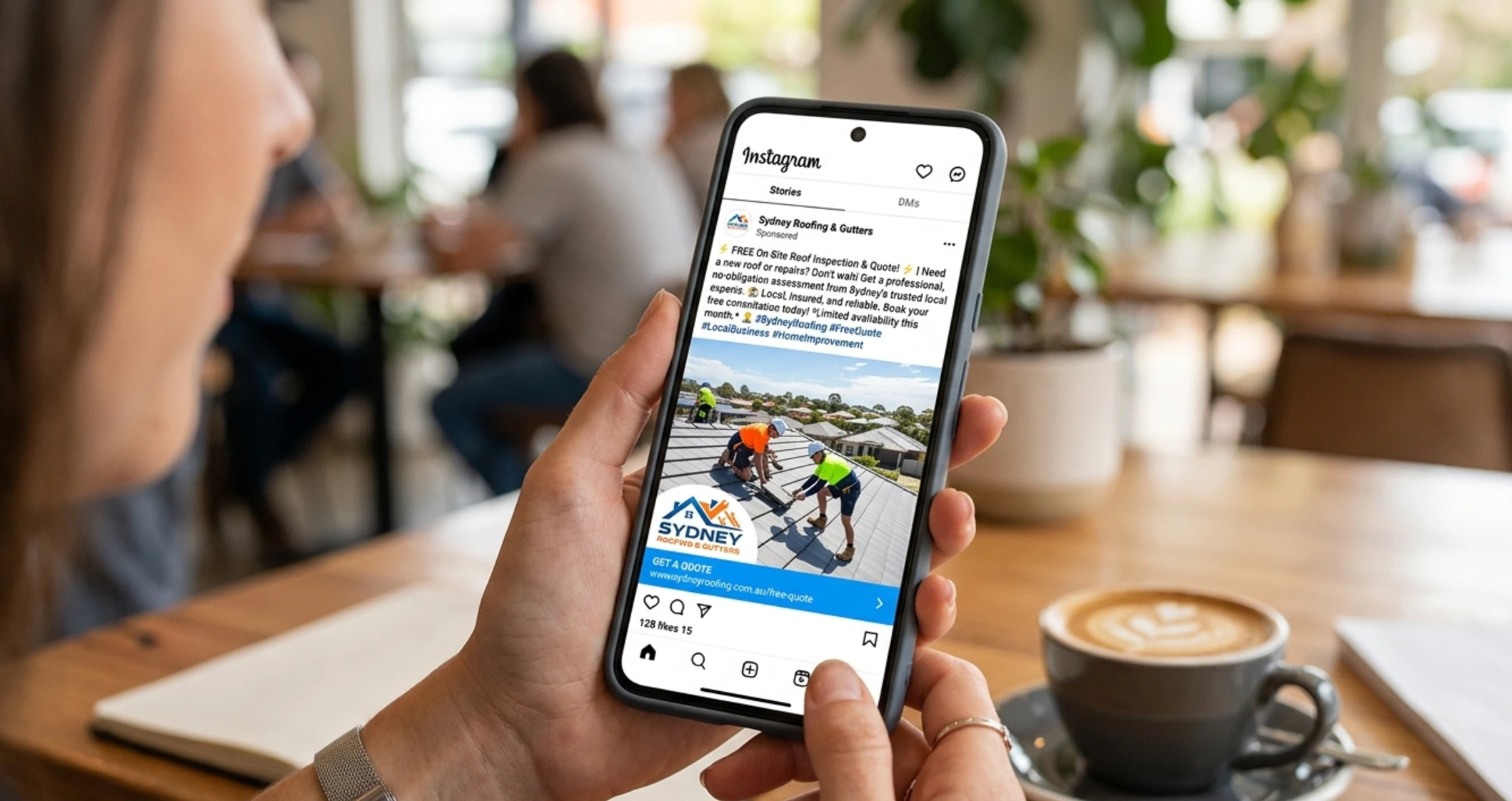
For many small businesses in Australia, Meta ads promise precise targeting, fast results and flexible budgets. Yet the real question owners keep asking is simple: “Are Meta ads actually worth the money and effort?” At Volcano Marketing, we speak with local businesses every week that are unsure whether to invest in Meta ads or shift their spend to Google SEO or other channels. The platform can deliver strong reach across Australian suburban regions and niche audiences, but it can also burn through limited budgets if the strategy is not right.
In this article, our Sydney based digital marketing experts explore how Meta ads really perform for Australian small businesses across different industries and locations. Readers will learn what kind of results are realistic, how costs compare with other marketing options, which targeting and creative approaches tend to work well in the Australian market and how to avoid common money-wasting mistakes.
By the end, business owners will have a grounded understanding of when Meta ads make financial sense, how to measure whether campaigns are profitable and what it takes to turn the platform from a risky expense into a more reliable source of leads and sales.
Meta ads generate leads by putting a specific offer in front of a clearly defined audience, then capturing their details so the business can follow up. Done properly, it becomes a measurable system where strangers see an ad, click through to something useful and hand over their contact information in exchange for value.
For small businesses in Australia, the key is to connect Meta’s targeting and ad formats with a clear next step, such as a quote request, booking or download. The strongest campaigns are built so every click has a clear path towards becoming a customer.
Lead generation starts with showing ads only to people who are likely to buy. Meta’s audience tools make this possible at a very granular level.
A local business can target by suburb, postcode or radius around a shop or service area. For example, a plumber in Brisbane can show ads only to homeowners within 15 km of their base rather than paying to reach the whole state. Targeting can then be layered with age, gender, interests and behaviours to narrow it further. A childcare centre might focus on adults aged 25 to 45 who are parents and live within 5 km.
Campaigns are usually built around:
This helps direct the budget towards people who are more likely to care about the offer.
Targeting alone does not create leads. The ad also needs to give people a clear reason to click and act now.
Effective Meta lead ads usually centre on one strong offer, such as a free quote, limited-time discount, free assessment or downloadable guide. The creative then supports that offer with:
For a local electrician, the ad might highlight same-day service in a specific area and a fixed callout fee. For an online store, it could be free shipping in Australia on first orders. Testing different versions of images and text helps show which combination is more likely to generate leads at a sustainable cost.
Once someone clicks the ad, Meta needs a place to collect their information and move them closer to making contact or buying.
There are two primary methods. Instant forms open inside the platform and let people submit their name, phone and email in a few taps, which works well for quote requests and bookings. Alternatively, traffic can be sent to a landing page on the business website with a contact form or booking system. This is often a better fit for businesses that need more space to explain services, answer objections or show testimonials.
Most campaigns also track what happens after the click using the Meta Pixel and conversion events. This helps show which audiences and ads are producing genuine enquiries, not just likes or low-quality clicks. With that feedback, campaigns can be refined over time so the cost per lead improves and lead quality becomes easier to assess.
For most small businesses in Australia, Meta ads are relatively affordable to test, but costs can climb quickly without clear limits. What a business pays depends on its audience size, competition in its niche and how well its ads are set up and optimised over time.
In Australia, many small businesses begin testing with ad spends in the range of $20 to $50 per day, although some very local campaigns may start lower and some industries may need more to generate useful data. The real question is not just what Meta charges, but what it costs to generate a lead or sale that makes the spend worthwhile.
Meta usually charges per click or per 1,000 impressions. Across small business campaigns, broad benchmarks often look something like this:
A local café or gym targeting a small radius may sit closer to the lower end. Competitive sectors like finance, legal or high-value home services often trend higher because more advertisers are competing for similar audiences.
Ad objectives also affect cost. Campaigns set to reach or video views often show lower costs per 1,000 impressions. Campaigns focused on leads or purchases may cost more per click but are generally aimed at traffic that is more likely to convert.
For very small local businesses, a sensible testing budget is often around $300 to $1,000 over two to four weeks. This is usually enough to gather early data on which creatives, audiences and messages are showing promise. For ongoing activity, many Australian small businesses settle into monthly budgets such as:
The key is to decide what a lead or sale is worth. If a new client is worth $800 in lifetime value, then paying $80 to acquire that client may still be highly profitable, even if the daily budget feels high at first.
Meta’s direct ad charges are only part of the picture. Small businesses also need to allow for:
Many owners try to run everything themselves and treat that time as free, but there is still a real cost if that time could have been used for sales, operations or client work. Factoring in both media spend and management usually gives a clearer view of the true cost of advertising on Meta platforms in Australia.
Some small businesses in Australia see Meta ads drive steady leads and sales, while others spend a few hundred dollars and get almost nothing. The difference rarely comes down to luck. It usually comes down to how well the campaign is set up, how clearly it is targeted and how closely the offer matches what people actually want.
When underperforming campaigns are reviewed, a few consistent issues usually stand out. Fixing these can sometimes turn Meta from a money pit into a more reliable channel, or confirm that it is simply not the right fit for that business.
Strong campaigns start with a clear audience. Meta’s targeting can be powerful, but it is easy to go too broad or too narrow.
If a local electrician in Brisbane targets all of Australia, the daily budget may disappear on people who would never become customers. On the other hand, if a niche eCommerce brand only targets a tiny interest group of a few thousand people, the ads can fatigue quickly and costs may rise.
High-performing campaigns usually:
When targeting lines up with the real buyer profile, the cost per lead or sale often becomes more consistent and easier to manage.
Even strong targeting will not work if the ad does not grab attention or the offer is weak. Meta platforms are interruptive environments, so the creative and message need to become clear quickly.
Campaigns that perform well typically:
For example, a Cairns beauty clinic promoting “20 per cent off first treatment this month” with before-and-after imagery may outperform a generic “Book an appointment” ad. The more specific the promise, the easier it is for people to decide whether it is relevant to them.
Many small businesses run ads without setting them up in a way that gives Meta’s algorithm a fair chance to optimise properly.
Common problems include choosing the wrong objective, such as optimising for traffic instead of leads, using too many ad sets on a very small budget and not installing or correctly configuring the Meta Pixel. This can lead to plenty of clicks but very few tracked enquiries or purchases.
Stronger campaigns:
With the right structure and tracking in place, it becomes much easier to judge whether Meta is genuinely profitable for that specific small business or whether the budget would be better used elsewhere.
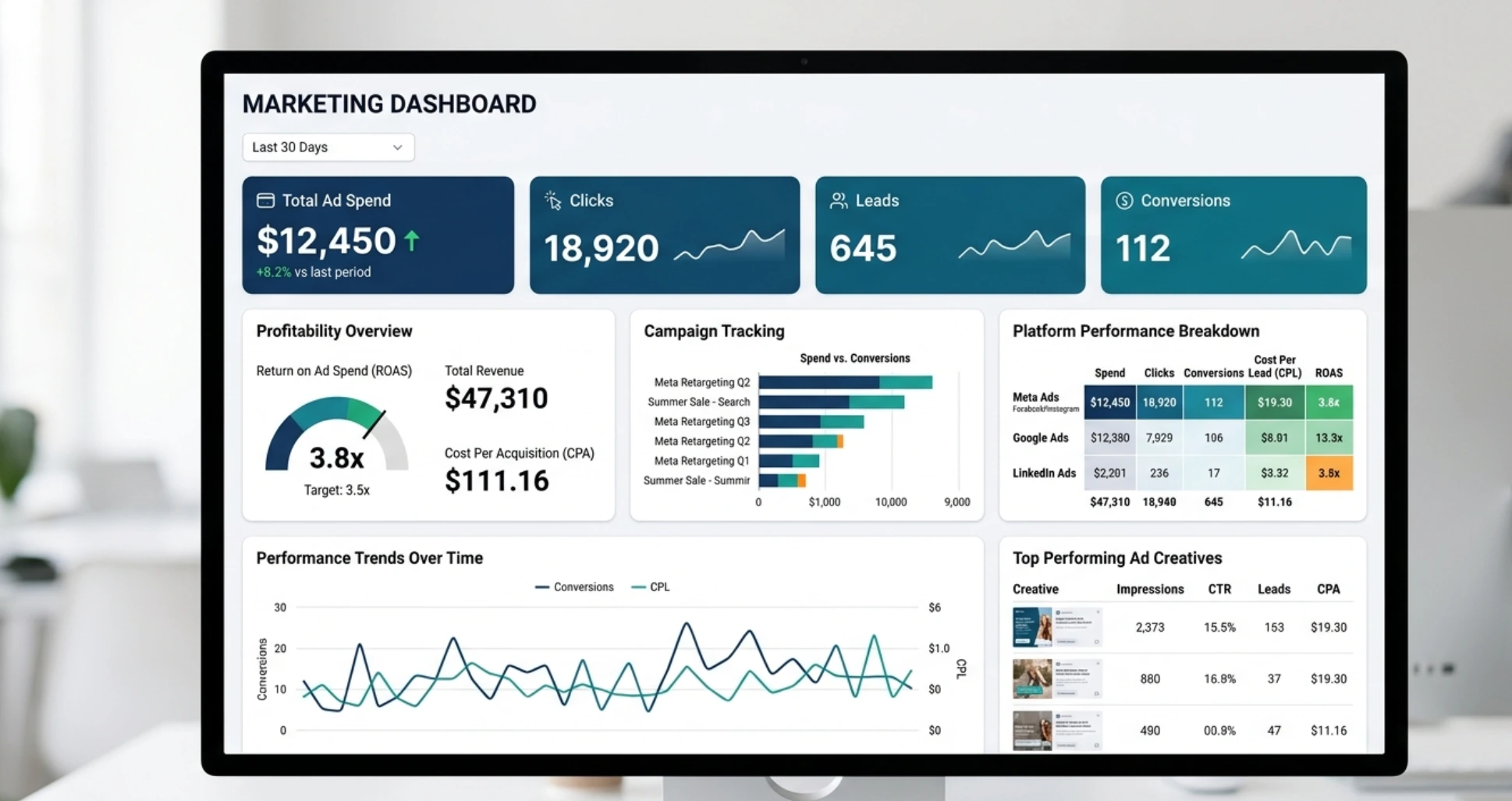
For most small businesses in Australia, the real question is not “Which is better?” but “Which is better for this specific goal right now?” Meta ads and Google Ads work at different moments in the customer journey. One often helps capture attention while people are browsing social platforms, and the other often captures demand when someone is actively searching.
Volcano Marketing usually recommends treating them as complementary tools. Even so, it helps to be clear on where each platform tends to deliver the strongest results so owners can decide where to put a limited budget first.
Meta ads often work well when a business needs to build awareness, generate interest or reach a very specific type of person at a relatively low entry cost.
Because targeting is based on demographics, interests, behaviours and custom audiences, Meta can be effective for:
For example, a Melbourne Pilates studio can target women aged 25 to 45 within 5 km who are interested in fitness and wellness. The studio pays to place engaging video or image ads in front of that group, even if they are not currently searching for Pilates.
Meta is also useful for testing offers quickly. With a modest budget, a business can compare different creatives, headlines and audiences and see which combinations produce the strongest early signs. This can be especially useful for newer businesses that are still refining their message or niche in the Australian market.
Google Ads often has the advantage when the priority is capturing high-intent leads or sales. Users on Google are already searching for solutions, which often means they are closer to taking action.
Google is especially strong for:
A Sydney roof repair company, for instance, can bid on “emergency roof repair Sydney” and pay only when someone clicks. Those clicks often cost more than a Meta click, but lead quality may be stronger because the user already has a clear need.
Google search campaigns also integrate well with location extensions, call extensions and Google Maps, which can be especially useful for brick-and-mortar or service area businesses across Australia.
For many small local service businesses in Australia, starting with Google Ads makes sense because it captures existing demand, while Meta can then support remarketing, awareness or follow-up campaigns.
For newer brands, eCommerce stores or visually driven products, Meta can sometimes be the better first step because it helps build awareness, gather audience data and test offers before scaling further.
In practice, the most reliable approach is often to run controlled tests on both platforms, track cost per lead or cost per sale and then shift more budget towards whichever channel is acquiring customers at a profitable cost.
For a small Australian business wondering if Meta ads are worth it, the key is to treat it as a business decision, not a guess. Meta can work very well, but only when the audience is a fit, the numbers stack up and there is enough time and budget to test properly.
Before investing serious money, it helps to look at four things: audience, offer, budget and internal capacity. If those line up, Meta is usually worth a structured trial rather than a large long-term commitment upfront.
Start with your ideal customer, not the ad platform. Meta’s ad system runs across both Facebook and Instagram, so this applies to both.
For a local café, hairdresser, gym, tradie or professional service in Australia, it is very likely that target customers spend time on Facebook or Instagram. Where Meta may be weaker is with very young audiences who are more active on TikTok, or highly niche B2B markets where decision-makers may be easier to reach through LinkedIn, email or search.
A simple test is to look at existing customers. Ask how they found the business and whether they follow similar brands on Facebook or Instagram. If most say Google, word of mouth or referrals, and nobody engages with social content, Meta might not be the first channel to prioritise. In contrast, if people already like, comment on or share organic posts, paid ads can often amplify what is already resonating.
Meta is an interruption channel. People are not actively searching for a product, so the offer needs to be clear and attractive, and the follow-up process needs to work.
For eCommerce, this usually means having a product that already sells through another channel, a website that loads quickly on mobile and simple pricing. A Brisbane fashion boutique, for example, might test a best-selling line with a limited free shipping offer rather than pushing a full catalogue.
For local services, it is rarely enough to just boost a brand-awareness post. A stronger approach is usually a specific outcome-based offer, such as a free roof inspection, a fixed-price initial consult or a new-member intro pack. That offer then needs a simple path to response, like a short web form, a click-to-call button or a booking link, plus a clear plan for responding to leads promptly.
If the business cannot describe its best offer in one sentence or has no process to convert an enquiry into revenue, it is usually too early for Meta ads.
Meta ads need a test budget and a realistic time frame. For many small Australian businesses, a practical starting point is:
Before spending any money, decide what success looks like. For an electrician it might be cost per lead under a certain dollar figure. For an online store it might be a target return on ad spend. Set up tracking in Meta Ads Manager and Google Analytics so results can be tied back to real enquiries and sales, not just clicks or likes.
Meta ads are worth testing when a business has enough budget, enough time and a clear way to measure results. However, if resources are very limited, it may be smarter to focus on another channel first. Ultimately, their value depends on the business’s goals, offer, margins and capacity to manage campaigns properly. When used strategically, Meta ads can offer targeted reach, measurable performance and room to scale, but they still require clear objectives, strong creative and ongoing optimisation. For Australian small businesses willing to track results and adapt, they can become a reliable marketing channel rather than just an expense.