Request a FREE SEO audit & quote
Unlock the full potential of your online presence with our expert SEO services.
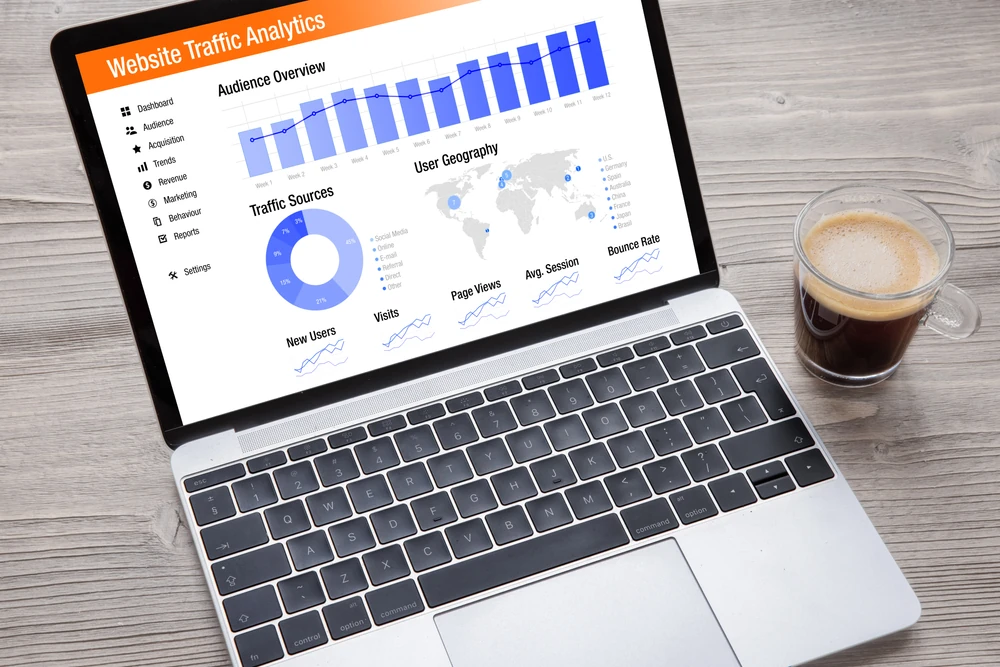
What percentage of website traffic should realistically come from organic search? It’s one of the most common questions businesses ask when reviewing their marketing performance or deciding how much to invest in SEO. While industry averages often quote broad ranges, those numbers rarely reflect the differences between sectors, business models or growth stages. Without context, benchmarks can lead to either underestimating organic search or setting expectations that are difficult to sustain.
This article breaks down what a typical organic traffic share looks like, how it varies by industry and marketing mix, and what actually determines where a business will fall within that range. Rather than focusing on a single “ideal” percentage, the goal is to understand what healthy organic performance looks like for your type of business and how to evaluate it properly using your own data.
Organic search traffic is the visitors that arrive on a website after clicking unpaid results in search engines like Google or Bing. In other words, it includes all clicks that come from the main search listings rather than from ads, social media, email or direct visits. When someone searches for “digital marketing agency in Sydney," sees a result in the natural listings and clicks through, that visit counts as organic search traffic.
For most websites, organic search is a core channel because it connects real user intent with relevant content at the exact moment a person is researching a problem or looking for a solution. Unlike paid campaigns, where visibility stops when the budget pauses, organic visibility can compound over time if a site is well optimised and genuinely helpful.
It is helpful to distinguish organic search from other common traffic types in analytics platforms.
Paid search traffic comes from pay-per-click ads that appear above or below the organic results. These clicks are driven by ad spend and are labelled as paid or CPC traffic rather than organic.
Organic search traffic specifically requires that the session originates from a search engine, from an unpaid listing and that the analytics platform can recognise the search engine as the source.
In tools like Google Analytics organic search traffic is grouped under the “Organic Search” channel. Each session includes a source, such as Google or Bing and Medium, typically organic. Trusted marketers in Sydney monitor this channel to understand how well SEO efforts are performing.
Key reports that relate to organic search include:
These insights help identify which content attracts searchers, how they behave after landing and where there are opportunities to improve visibility or conversion.
Organic search traffic is valuable because it reflects genuine user intent. When people click unpaid results, they are usually researching a problem, comparing options or actively looking for a solution. This makes organic visitors more qualified than many other traffic sources.
A consistent stream of organic traffic can also reduce overall customer acquisition costs. Unlike paid campaigns, where visibility stops when the budget pauses, strong organic rankings continue to attract visitors without paying for every click.
Building sustainable organic traffic requires a technically sound website, high-quality content aligned with search intent and a clear, user-friendly experience. When these elements work together, search engines are more likely to rank pages prominently, resulting in steady growth in qualified visits over time.
Most websites receive a substantial share of their traffic from organic search, but the exact percentage varies depending on industry, audience behaviour and overall marketing mix. Across multiple industry studies, a common range is 30 to 60 per cent of total website traffic, with many B2B and information-led websites sitting closer to 50 per cent or higher when SEO is a core focus.
When a site is technically sound and consistently publishes content aligned with search intent, organic search often becomes the single largest traffic source over time. However, it rarely accounts for all traffic, as users also arrive through paid ads, social media, email campaigns, referrals and direct visits.
While every site is unique, some clear patterns emerge when looking at analytics across sectors.
Content-rich and B2B sites such as software, professional services and education often see 40 to 65 per cent of traffic from organic search because users are actively researching problems and solutions. Ecommerce sites frequently see 30 to 50 per cent from organic since paid search and social ads also drive substantial traffic. Local service businesses may see 25 to 50 per cent depending on the strength of their Google Business Profile and local SEO.
On the other hand, brand-driven consumer products or strong social brands might see a lower share of organic visits because direct and social traffic dominate. That does not mean SEO is weak; it simply reflects that other channels are pulling more weight.
Several practical factors determine where a site will sit within these ranges.
The size and quality of the content library are critical. Sites with many useful pages targeting specific questions tend to gain a larger organic share. Technical health, such as site speed, mobile friendliness, crawlability and structured data, also impacts how much search traffic a site can win.
Brand strength plays a role too. Well-known brands receive more direct and branded traffic, which can reduce the percentage from organic search even when organic visits are growing in absolute terms. Marketing mix matters as well. Heavy investment in paid ads can raise total traffic so the organic percentage falls even if organic sessions hold steady or increase.
Rather than chasing a universal target, it is better to use industry benchmarks as a reference point only. The main questions to ask in analytics are whether organic sessions are rising over time, which landing pages attract organic visitors and how organic users behave compared with other channels.
If organic search drives less than 20 per cent of traffic for a content- or search-driven business, this often signals missed SEO opportunities such as thin content, weak on-page optimisation or technical issues. If organic is above 60 per cent and other channels are very small, it may indicate over-reliance on search and a need to diversify with email, paid campaigns or partnerships so growth is not tied to a single source.
Organic search traffic is shaped by a combination of on-site quality, off-site authority and technical performance. These factors determine how often a website appears in search results and how likely users are to click through once it does. The percentage of total traffic that comes from organic search ultimately reflects how well a site performs across these areas within its specific market.
Improving visibility and click-through rate is rarely about a single tactic. It requires strengthening content relevance, technical foundations and overall site authority in a coordinated way. When these elements align, organic search can shift from a minor channel to a primary source of acquisition over time. Organic performance is not fixed; it responds directly to the quality of the website and the level of competition in the search landscape.
Search engines prioritise content that clearly answers user questions in depth and in a format that matches intent. If a site only publishes thin or generic pages, it will struggle to capture a large share of organic traffic even in low-competition niches.
High-performing sites usually have:
For example, a B2B software company that publishes detailed how-to guides and implementation resources is more likely to rank for long-tail searches that collectively drive significant organic traffic than a competitor with only basic product pages.
The authority of a website heavily influences how much organic traffic it can win, especially for competitive keywords. Authority is shaped by both backlinks and overall brand recognition.
Sites with a strong backlink profile tend to secure more top 3 rankings, which attract the majority of clicks. Strategic digital PR guest content and useful linkable assets like tools or original research help build this authority. In parallel, stronger offline and online brand presence increases branded search volume and click-through rates because users recognise the name in results and are more inclined to choose it.
For local businesses consistent citations and reviews across platforms like Google Business Profile and local directories also impact how often they surface in local search results, which can dramatically change the organic share of total traffic.
Even strong content and authority will not translate into high organic traffic if users or search engines struggle to access or use the site. Technical SEO and user experience influence both rankings and how much traffic is retained.
Fast loading times, mobile-friendly design and clean site architecture help search engines crawl and index more pages and improve user engagement metrics. Clear internal linking ensures that authority flows to important pages, increasing their chances of ranking. Rich snippets schema and compelling meta titles and descriptions improve click-through rates, which directly affect how much traffic each ranking generates.
Finally, the level of competition for the target keywords, sector and geography places a ceiling on potential organic share. Niches with weak competitors often see sites capture 60 per cent or more of traffic from organic search, while mature sectors with dominant brands or heavy paid activity may limit organic to a smaller but still valuable slice.
Organic search traffic is one of the most reliable indicators that a website is genuinely solving problems for its audience. Unlike paid campaigns that stop the moment a budget is paused, organic visibility compounds over time and can keep delivering visitors and revenue long after the initial work is done.
For businesses that want to grow in a predictable way, organic search is the channel that steadily lowers acquisition costs, builds brand authority and provides a consistent pipeline of qualified prospects. Digital marketing experts focus heavily on organic search because it creates assets that keep working rather than one-off spikes in traffic.
Paid traffic works like a tap. When the budget is turned off, the traffic disappears. Organic search behaves more like an investment. A well-optimised page may take months to rank, but once it reaches the first page, it can drive visitors for years with only light maintenance.
This compounding effect means that the cost per lead or sale from organic search usually decreases over time. A single high-performing guide or product page can:
Instead of paying for every click, digital marketing experts help clients invest in content and technical SEO that reduce their dependence on paid traffic as they grow.
Organic visitors are often further along in the buying journey because they are actively searching for answers, comparisons or solutions. When someone searches for phrases such as “best CRM for small teams” or “how to fix a slow Shopify site”, they are signalling a specific need rather than passively browsing.
If a website aligns its content with that intent through focused landing pages, clear messaging and relevant calls to action, those visitors typically:
Prioritising high-intent search terms over vanity metrics leads to a stronger, more efficient funnel. Instead of chasing large volumes of loosely related traffic, this approach attracts visitors who are more likely to enquire, purchase or engage in a meaningful way.
Ranking consistently for important searches trains users and search engines to see a brand as an authority. When people repeatedly find helpful content from the same company, they begin to trust its advice and are more likely to enquire or purchase.
From a strategic point of view strong organic presence also makes growth more defensible. Competitors can quickly outbid a brand on ads, but it is much harder to displace a site that has:
By investing in organic search, businesses can build a protective moat that reduces vulnerability to rising ad costs and platform changes while strengthening long-term resilience.
Understanding what percentage of website traffic comes from organic search is less about chasing a specific number and more about assessing how visible and resilient a business really is. A strong organic share reflects solid technical foundations, relevant content, earned authority and alignment with real search intent.
The priority is not to maximise organic traffic at the expense of other channels, but to build a balanced acquisition strategy where search plays a stable and growing role. Treated as a long-term asset, organic search compounds over time, lowers acquisition costs and attracts higher-intent visitors who are more likely to convert. When evaluated strategically rather than emotionally, organic performance becomes a reliable indicator of sustainable growth.