Request a FREE SEO audit & quote
Unlock the full potential of your online presence with our expert SEO services.

For many small businesses, deciding what content to create first can be challenging. Should the focus be on service pages that clearly explain what the business offers and encourage enquiries, or blog articles that attract potential customers through search engines and build long-term trust? As a digital marketing agency in Sydney, Volcano Marketing helps businesses understand that both content types play important but different roles in creating a website that generates consistent results.
This article explains how to decide where to invest time and resources for the greatest impact. It examines how service pages convert visitors into leads and sales, how blog content strengthens search visibility and credibility, and why effective websites use both strategically rather than treating them as competing priorities.
Service pages form the foundation of a small business website. They explain what the business offers, who the service is for, where it is available and why a potential customer should make an enquiry.
For most local and service-based businesses that need more bookings, quote requests or sales, improving service pages will usually have a greater immediate impact than publishing additional blog content.
Service pages also give search engines clear information about what a business does and which searches its website should appear for. Without strong service pages, a website may attract informational traffic but fail to convert visitors because the core services are difficult to understand or find.
People searching for terms such as “[service] near me”, “[service] in [location]” or “[service] pricing” often already know what they need. They may be comparing providers, checking availability or preparing to request a quote.
Service pages are designed to match this commercial intent.
A strong service page should:
For example, someone searching for an emergency plumber is more likely to enquire after landing on a focused emergency plumbing page than a general article about plumbing problems. The visitor wants immediate confirmation that the service is available, relevant to their problem and offered in their area.
Blog articles can attract and educate potential customers, but service pages usually play the main role in converting visitors into leads.
Contact forms, quote requests, booking tools and phone calls should all connect directly to a specific service. Without well-developed service pages:
Improving service pages can increase conversions from traffic the website already receives. This is particularly important for small businesses with limited marketing budgets.
For example, a detailed kitchen renovation page with project images, an overview of the process, pricing guidance and a consultation form will generally be more useful than a single services page containing only a short list of offerings.
A strong blog strategy should be built around the business’s core services.
Each important service page can act as a central hub, supported by articles that answer related questions, explain options or address common concerns. This structure is difficult to create when the main service pages are unclear, incomplete or poorly targeted.
Service pages help determine:
Publishing articles before establishing the core service pages can lead to scattered topics that attract traffic without supporting a clear business goal.
A strong service page should answer the practical questions a motivated visitor has before contacting the business. It should provide enough information for the person to understand the offer, assess whether it suits their needs and feel confident taking the next step.
The opening section should explain exactly what the service is and who it is for.
Within the first few paragraphs, a visitor should understand:
Avoid vague descriptions such as “tailored solutions” or “comprehensive services” unless they are supported by specific information.
For example, “monthly bookkeeping for restaurants and hospitality businesses” is more useful than “professional financial solutions for businesses”.
Where a service has different options, packages or customer types, mention them early and explain them in more detail further down the page.
Once the service is clearly defined, the page should explain how it works. A simple process overview helps visitors understand what will happen after they make contact.
A typical service process may include:
Each step should include relevant details, such as estimated timeframes, what the customer needs to prepare and what is included in the service.
Pricing should also be addressed where practical. Exact rates may not be possible for services that depend on site conditions, project scope or inspection findings, but the page can still explain:
Pricing guidance helps customers assess whether the service is likely to suit their budget and can reduce unsuitable enquiries. However, businesses should avoid publishing figures that are likely to be inaccurate or misleading without a proper assessment.
Other practical information may include:
A service page should not rely only on claims about quality or experience. It should provide evidence that supports those claims.
Useful trust signals include:
Specific information is generally more persuasive than broad marketing statements.
For example, “completed within the agreed two-day shutdown period to minimise disruption” is more meaningful than “fast and reliable service”, provided the business can support the claim.
Calls to action should also be clear and relevant to the service. These may include:
Contact options should be easy to use on desktop and mobile devices.
Before investing heavily in blog content, businesses should review whether their service pages are helping or limiting conversions.
Analytics can provide useful signals, but individual metrics should not be assessed in isolation.
For each important service page, review:
A short visit does not always indicate a poor page. A visitor may quickly find a phone number, make a call and leave. For this reason, bounce rate or engagement time should be considered alongside tracked enquiries and other conversion actions.
Warning signs may include:
These patterns may suggest that the offer is unclear, the content is too thin or the next step is difficult to find.
A service page should answer the questions a potential customer is likely to ask before making contact.
Common weaknesses include:
The page should explain what happens first, what happens next and what the customer can expect from the service.
Even a clear page may underperform if it does not provide enough evidence.
Warning signs include:
The strongest service pages combine clear information with relevant proof and visible contact options.
Blog content becomes more valuable once the core service pages are clear, useful and capable of generating enquiries.
The right time to invest in blogging depends less on business size and more on the strength of the website’s existing foundation.
.webp)
Blog investment makes sense when:
The pages do not need to be perfect before blogging begins, but they should provide a clear and credible destination for readers who want to learn more or make an enquiry.
Service pages mainly attract people who already know what they want. Blog articles can reach people who are still identifying the problem, comparing options or researching possible solutions.
Signs that blog content may be useful include:
For example, a plumbing business may have an emergency plumbing service page, while supporting articles could explain:
These topics attract people earlier in the decision-making process and direct them towards the relevant service when professional help is needed.
Blog traffic is only useful when readers have a relevant next step.
A blog strategy should include:
A broad educational article may direct readers to a checklist or guide. A comparison article may lead to a consultation, while a problem-focused article may encourage readers to request an assessment or quote.
Blog articles should strengthen service pages rather than compete with them. Each article should help the reader understand a service, answer a relevant question or overcome a barrier to enquiry.
Begin by listing the business’s main services and identifying the questions customers ask before buying.
Topics that are too detailed or educational for the main service page may be suitable for articles.
For example, a hot water system installation page may be supported by articles such as:
Each article should answer a specific question and direct readers to the main service page where appropriate.
Service pages generally target broad, high-intent searches such as:
Blog content can target longer and more specific searches, including:
These searches often reflect research, comparison or problem-identification intent. They may attract people who are not yet ready to search directly for a provider but could require the service soon.
Internal links should guide readers between related content and core service pages.
Blog articles should link to the service page as the main place to view the offer, request a quote or book an appointment. Service pages can also include a short resources section linking to useful supporting articles.
This creates a clear hierarchy:
Every article should have a purpose and a next step that reflects the reader’s likely intent.
For example:
Calls to action should be relevant and specific rather than sending every reader to a generic contact page.
Small businesses often publish articles consistently but see little improvement in traffic or enquiries. In many cases, the problem is not blogging itself but the topic selection, structure or connection to the rest of the website.
A business blog should primarily address customer questions, problems and decisions rather than operate as a company diary.
Posts about internal events or general updates may have value for existing customers, but they rarely support search visibility or lead generation.
Useful topic sources include:
A plumbing business will usually gain more value from an article about what to do when a hot water system starts leaking than a general seasonal maintenance post with no connection to a service.
Blog posts should not target the same commercial search terms as core service pages.
For example, a blog titled “Roof Repair Services in Sydney” may compete with the main roof repair page. Search engines may struggle to determine which page should appear for the term.
Service pages should generally target commercial searches such as:
Blog articles should support them with educational topics such as:
Where topics are closely related, internal links should reinforce the main service page as the primary commercial page.
Publishing unrelated articles without a conversion path can create a large content archive that generates little business value.
Each article should have a defined role within the customer journey:
Without this structure, even well-written articles may produce page views without contributing to enquiries or sales.
The right balance between service pages and blog articles will change as the website and business develop. It should be guided by customer needs, commercial priorities and performance data rather than a fixed publishing ratio.
Businesses do not need to create every possible service or location page immediately.
Start with the services that:
Once these pages are useful and capable of converting visitors, the business can expand into secondary services, additional locations or more specialised offers.
After the core pages are established, blog content can be introduced gradually.
Consistency is more useful than volume. One detailed and relevant article each month may deliver more value than several rushed posts with little connection to customer needs or services.
A roofing company, for example, may build a supporting content group around roof repairs by covering:
These articles can answer questions that would make the service page unnecessarily long while still directing readers towards the relevant service.
Service pages should not remain unchanged after publication.
Businesses should review them regularly to ensure that information about services, pricing, availability and service areas remains accurate.
Useful updates may include:
Blog performance may also reveal opportunities to update service pages. When an article attracts traffic for a recurring question, the main service page can briefly address that issue and link to the article for more detail.
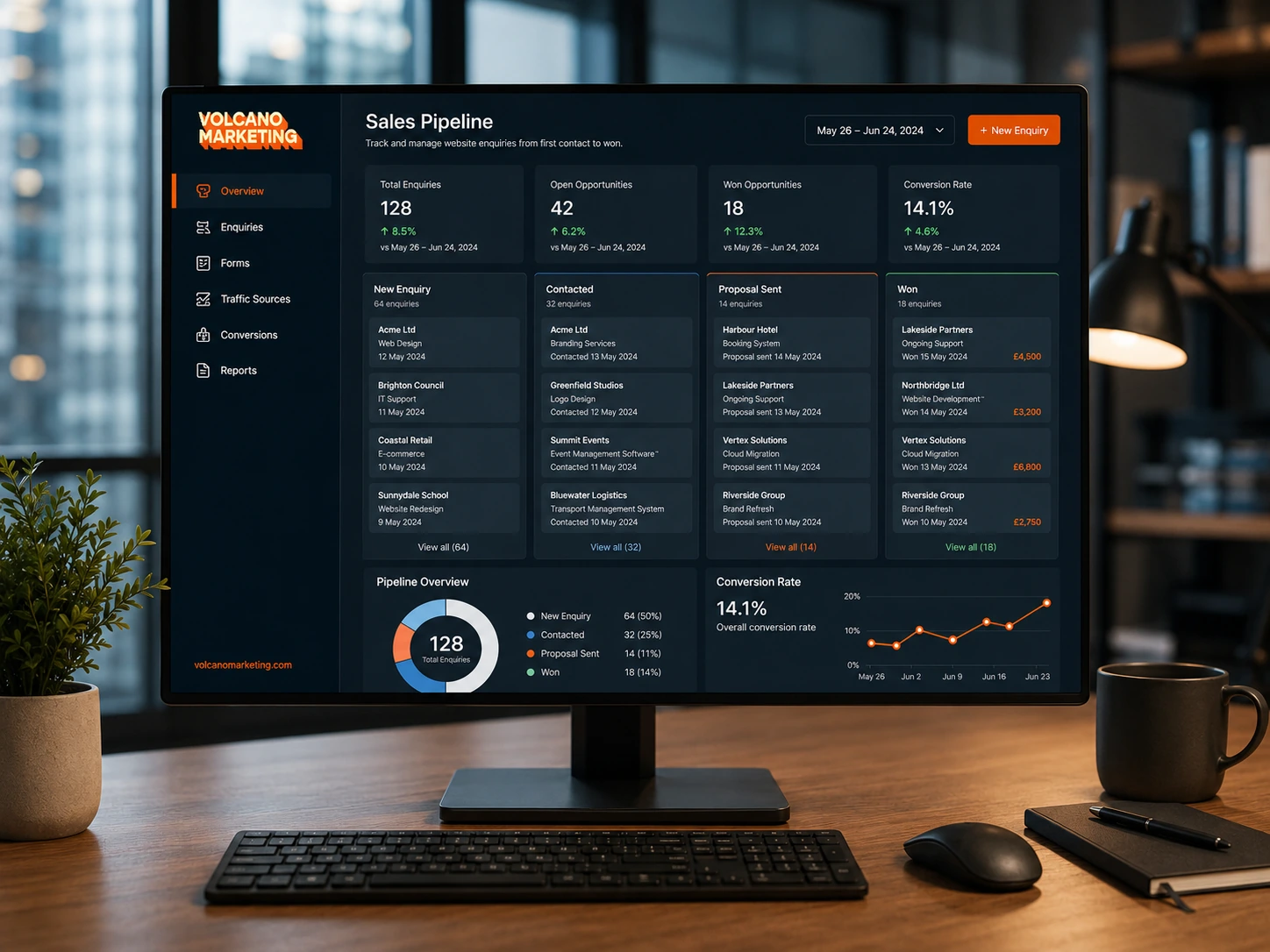
Content decisions should be based on results rather than publication volume alone.
When a service page receives traffic but produces few enquiries, improving its offer, proof, layout and calls to action should take priority over publishing more articles.
When a service page converts well but receives little organic traffic, supporting articles and improved internal linking may help increase visibility.
Blog articles should also be assessed by more than page views. Useful measures include:
An article with modest traffic that contributes to qualified enquiries may be more valuable than a high-traffic post that attracts readers with no need for the business’s services.
Choosing between service pages and blog content is not about deciding which format is better overall. It is about identifying what the website needs at its current stage.
For most local and service-based businesses, strong service pages should come first. They provide clear information, match high-intent searches and give customers the confidence to make an enquiry or booking.
Once that foundation is established, strategic blog content can improve search visibility, answer customer questions and attract people earlier in the buying process.
Volcano Marketing encourages businesses to treat their website as a connected marketing asset rather than a collection of unrelated pages. By building clear service pages first and supporting them with relevant, search-focused articles, businesses can attract more qualified visitors and create a stronger path from initial research to enquiry.